
How to Find Who Owns a Niagara County Property
Start from the parcel, not the name. In PROS-GAR, search by address or SBL. Pick the municipality that matches the land. Then note the owner and tax-map number shown. Check the newest deed in SearchIQS against that assessment name. The roll is the tool for finding an owner of record. A deed names the parties and describes the land transferred. Neither document rules out a later filing or a correction. It also cannot rule out a trust interest or an indexing error.
- Locate the address or parcel in PROS-GAR and record the SBL, municipality, owner name, and access date.
- Search the County Clerk's SearchIQS index for the latest deed, checking the owner as grantee and the prior owner as grantor.
- Read the actual deed's vesting and legal description; verify that its described parcel matches the SBL and address.
- If the grantee is an entity, use the New York business-entity database to normalize its name and contact details, not to prove land ownership.
- Use a tax-mailing address only for a lawful property-related contact; do not infer occupancy from it.
Where Niagara County Owner Information Comes From
Owner information in Niagara County comes from records with different jobs. The assessment roll names an owner for tax administration. A deed records the conveyance and its vesting language. The Clerk's index locates the instrument, and GIS ties assessment data to mapped parcels. For company owners, the Secretary of State's entity search shows the formal name, status, county, service-of-process address, and agent where reported. It cannot tell you which parcel a company holds. The deed remains the evidence of land ownership.
| Source | Owner Info It Gives | Access |
|---|---|---|
| Assessment roll / PROS-GAR | Owner name attached to the parcel for assessment and tax-mail purposes. | County Real Property links; confirm roll year |
| County Clerk deed index | Parties and reference for a recorded transfer, mortgage, release, or other instrument. | SearchIQS access, courthouse computers, or Clerk copy request |
| NY business entity database | Formal entity name and reported status or service agent details. | New York Department of State search |
| County GIS | Parcel location and assessment-linked attributes where displayed. | Public viewer; geometry is for reference |
An owner of record is not always an occupant. A parcel may belong to a company, a trust, an estate, or a person whose tax mail goes elsewhere. Mailing addresses route official notices and can support a legitimate property inquiry, but they say nothing about who lives at the situs address. Some protected addresses are withheld or handled under separate New York confidentiality programs.
What "Who Owns This Property" Cannot Tell You
Public Niagara County property records show the assessment owner and the recorded parties, yet they cannot establish occupancy, personal relationships, or a clean title chain. The roll often lags a recently recorded deed. A portal may omit an instrument or misindex a name. Use the deed, the legal description, and the parcel key together, and confirm material findings with the Clerk or the Real Property custodian.
Lawful use. Owner information is appropriate for property research, a boundary issue, civic work, or a legitimate property-related notice. Do not use a name or mailing address to stalk, intimidate, threaten, or harass anyone.
Confirm the Niagara County Custodian
The official PROS-GAR parcel route is the county's entry point for an owner lookup. The page presents its access notice before any parcel card appears.
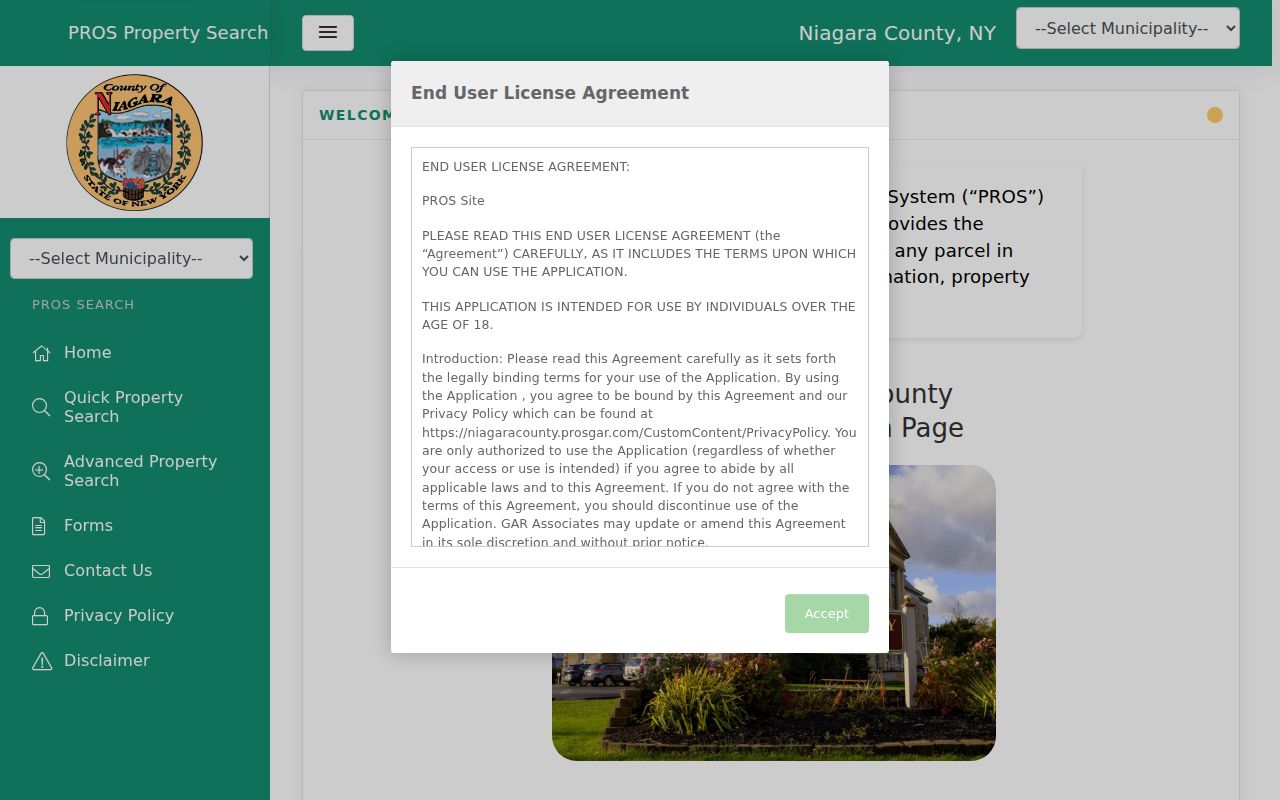
Once the parcel view opens, compare its owner name and SBL with the newest recorded deed. Only then draw an ownership conclusion.
Owner Names, Estates, and Company Ownership
Owner indexes are messy. Punctuation, initials, middle names, suffixes, and name order can all vary between records. Search the name as PROS-GAR displays it, then repeat with likely variants in SearchIQS. A death or an estate transfer can change that. An executor, administrator, trustee, or fiduciary deed may enter the chain. Search the entity and the individuals named in the instrument. Keep a company officer or registered agent distinct from the landowner, though. The deed's grantee line and legal description are what tie the entity to the parcel.
When several candidates share a name, compare these. Look at municipality, parcel description, approximate transfer date, and prior owner. Never merge people on a surname or mailing address alone. Ask the Clerk for help with an instrument citation. Or ask the assessor about a roll discrepancy.
Assessment Updates and the Newest Recorded Deed
The county's PROS-GAR terms warn that data may be incomplete, inaccurate, or delayed. The system publishes no fixed update interval. A deed can sit recorded for a while before an assessment screen shows the new owner. Compare the recording date and instrument against the roll's access date, and ask Real Property which owner it currently carries if the difference matters. Treat neither database as a real-time ownership feed. A deed may convey less than the full fee. It may also carry exceptions, easements, life interests, or other terms. Read the instrument and its preceding chain when those details matter. The index's party labels and sale fields are navigation aids, not legal conclusions.
Niagara County Parcel Identity Before Contact
Confirm the municipality, not just the owner. PROS-GAR separates the city choices for Niagara Falls, North Tonawanda, and Lockport from the neighboring towns. Postal place names can cover a wider area than a town line, so the city or town label matters more than the mailing city. The SBL is a stable bridge. It opens the same assessment parcel in GIS and connects map references across systems. Compare the situs address, SBL, owner, and description before mailing a letter. You can also ask an office to pull a deed. For a genuine property question, the assessment mailing address is the record's contact route. It is not a home address. It cannot reveal where a person spends their days. When a protected address is omitted, respect the limit. Use the custodian's published request process instead.
Follow a Niagara County Owner Name Into the Deed
A PROS-GAR owner hit is only an assessment lead. The deed settles the question. Take the name into SearchIQS and search it as grantee to surface a possible acquisition deed, then read the instrument and work the grantor backward through the deed records. Compare the SBL, municipality, legal description, and recording date before trusting any match. That step prevents mix-ups with similarly named owners. Watch the instrument type too. A mortgage or a lien is not an ownership transfer, so keep hunting for a deed or other instrument that actually conveys the interest.
One caution on coverage. Current SearchIQS material and an older help page disagree on when deed records begin, offering roughly 1941 versus roughly 1918. If your likely transfer sits near that boundary, give the Clerk the parties and the latest known citation, and ask which index series applies. A missing online name result is not proof that an earlier owner never existed.
Getting an Owner Record From the County Clerk
The County Clerk keeps land records at 175 Hawley Street, first floor, in Lockport. Walk-in hours run weekdays 9 a.m. to 5 p.m. Recording hours are 9:30 a.m. to 4:30 p.m., and the office answers at 716-439-7022. Online SearchIQS may sit behind a subscription. The Clerk's material describes public computers plus counter or mail copy requests as alternatives. Confirm current copy fees before you pay.
A written request should state the instrument type and the names. Add an approximate date, the municipality, and any book, page, or instrument number. Say whether you need a plain or certified copy. Certification authenticates the document; it is not a legal opinion. When a deed's language is unclear, reading it against earlier instruments or getting professional help is the safer path.
Entity, Trust, and Estate Names Need Care
An LLC's registered agent is just a contact. A service address proves nothing about ownership. Search the exact legal entity name from the deed in the New York business database, noting former names or status only to sharpen the land-record search. Trusts and estates trip people up. They may be indexed under a fiduciary, trustee, executor, administrator, or the decedent. Try each role and name variant in the instrument index. The Surrogate's Court supplies the probate route. The County Clerk's deed shows the land transfer. Read the two together when sequence or authority is unclear, but keep probate evidence separate from title evidence.
Owner Search Is Parcel Research, Not a People Search
The county owner field hunts parcels, not people. It links a name to its parcels. It won't reliably identify a resident. PROS-GAR owner entries use last-name-first guidance, and an equals sign can force an exact-surname match. Those options help retrieve assessment records. They do not erase spelling or indexing variation, so verify each likely match against the SBL and the municipality.
Respect a protected or absent mailing address. Never stitch address data from unrelated records into a guess at someone's private residence. For a legitimate ownership question, rely on the official record and ask the custodian about a permitted copy or correction route.